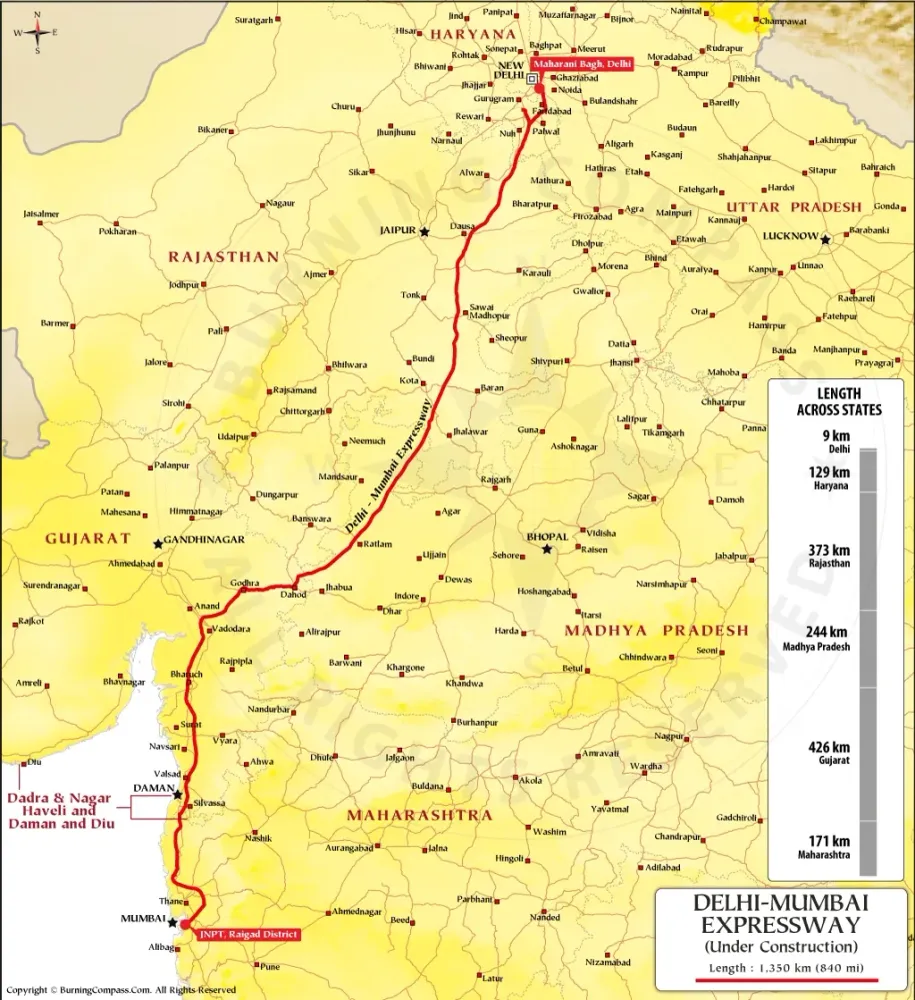
India’s landmark highway project, the Delhi–Mumbai Expressway, continues to progress steadily, with a major development in the Vadodara–Surat stretch. This crucial segment has now entered its final stage of construction, and the last remaining package is reportedly around 90 percent complete. If the current pace continues, the stretch is expected to open to traffic by late 2024 or early 2025, subject to safety audits and official approvals.
Once operational, this 1,350 km expressway will reduce travel time between Delhi and Mumbai from nearly 24 hours to just 12 hours, transforming both passenger movement and freight logistics across five major states.
Why the Vadodara–Surat Stretch Is Critically Important
Connects Industrial Cities and Manufacturing Belts
The region between Vadodara and Surat is one of India’s strongest industrial clusters. It hosts petrochemical zones, port-linked businesses, chemical hubs, textile industries, diamond polishing centers, and manufacturing units. The expressway provides a fast, access-controlled route that bypasses the heavy congestion of NH-48.
Boosts Real Estate, Warehousing, and Commercial Demand
The greenfield alignment has triggered rapid commercial interest. Several developers and businesses are exploring:
Warehousing and logistics parks
Retail commercial hubs
Industrial estates
Modern housing townships
Hospitality chains along the corridor
The accessibility and high-speed connectivity make this stretch an emerging investment hotspot.
Supports India’s Future-Ready Highway Network
The expressway features:
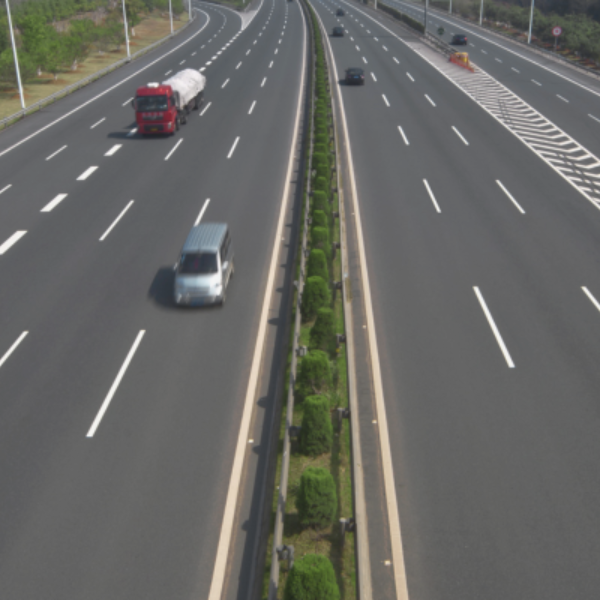
Eight lanes expandable to twelve
Smart traffic guidance systems
Road infrastructure suitable for high speeds
Wildlife crossings ensuring ecological safety
Limited access for smooth and controlled vehicular flow
The Vadodara–Surat stretch completes a major southern part of the corridor and brings the entire Delhi–Mumbai route close to its final shape.
Current Progress on the Vadodara–Surat Stretch
Recent construction updates show:
Bridge work in Bharuch–Kim zones is nearly complete.
Underpasses, overpasses, and interchanges are finalized in most segments.
Crash barriers, signages, median beautification, and lighting systems are being installed.
Final layers of asphalt surfacing are ongoing.
Safety testing and toll system installation have already begun in some parts.
While earlier deadlines were affected by land challenges and monsoon delays, the current phase is steadily progressing toward completion.
How the Expressway Will Transform Travel and Logistics
Faster Travel Between Major Cities
The expressway will cut the travel time between Delhi and Mumbai to half, enabling people to commute smoothly without multiple toll interruptions or congested points.
Efficient Goods Transportation
Industries in Gujarat and Maharashtra will experience:
Reduced travel hours
Lower logistics costs
Faster delivery volumes
Improved supply chain reliability
This is especially significant for textiles, diamonds, chemicals, pharmaceuticals, automobiles, and FMCG sectors.
Better Airport and Tourism Access
Airports such as Surat, Vadodara, Ahmedabad (via feeder routes), Jaipur, and Mumbai will experience increased connectivity. Tourism destinations like Udaipur, Daman, Silvassa, and Jawhar will also gain better accessibility.
Rise in New Businesses and Employment
Highway-based businesses—restaurants, EV charging stations, motels, repair services, and logistics centers—will expand along the corridor, generating employment across districts.
Why the Final Stage Requires Extra Precision
The expressway’s last stage includes:
Laying the final asphalt and concrete layers
Structural testing of bridges
Installation of reflective panels, barriers, and digital signage
Drainage and slope stability checks
Integration of toll plazas
Emergency response system installation
Multiple levels of safety auditing
Since the road is designed for high-speed travel, every detail must meet technical standards to ensure long-term durability and safety.
Realistic Opening Timeline for the Vadodara–Surat Stretch
Based on current progress and government comments:
Finishing touches will conclude by late 2024.
Safety inspections are likely to take place by early 2025.
Expected opening window: January to April 2025.
Partial openings of certain segments may occur earlier if they pass safety checks.
Economic Impact on Gujarat’s Regional Growth
Industrial Expansion in Bharuch and Ankleshwar
Businesses here will experience improved national connectivity, reduced freight time, and better access to ports and markets.
Surat’s Textile and Diamond Clusters Gain Faster Market Access
This expressway supports faster shipping to Delhi NCR, Jaipur, Ludhiana, and Mumbai—cutting transport costs and improving export efficiency.
Growth in Smaller Towns
Towns along the alignment will see more demand for residential housing, retail activity, and employment.
Integration with the Western Dedicated Freight Corridor
Together, the WDFC and the expressway will turn Gujarat into a powerful logistics hub supporting India’s trade growth.
Frequently Asked Questions
Is the Vadodara–Surat stretch of the Delhi–Mumbai Expressway fully completed?
No. It is in the final stage of construction. Around 90 percent of the last package has been completed, and finishing activities like surfacing, signage installation, and safety testing are currently underway.
When will the Vadodara–Surat expressway section open for public use?
The most likely opening window is between January and April 2025, depending on official inspections, certifications, and the pace of remaining works.
How much travel time will the Delhi–Mumbai Expressway reduce?
Once fully operational, the travel time between Delhi and Mumbai will drop from 22–24 hours to approximately 12 hours, thanks to controlled access and high-speed lanes.
Which regions benefit the most from the Vadodara–Surat stretch?
The biggest beneficiaries include Vadodara, Bharuch, Ankleshwar, Surat, Navsari, Vapi, and ultimately Mumbai. Delhi NCR, Jaipur, and Kota also gain faster access to major industrial zones in Gujarat.
Is the expressway designed for safe high-speed travel?
Yes. It includes intelligent traffic systems, wide lanes, strong crash barriers, and controlled entry points. The road design meets global standards for high-speed travel.
What were the main reasons for construction delays earlier?
Certain delays were caused by land acquisition issues, environmental clearances, changes in design, monsoon conditions, and the need to construct multiple high-load bridges in river zones.
Will toll charges be higher on this new expressway?
Yes, toll charges are expected to be slightly higher compared to older highways because the expressway is access-controlled and provides a significantly faster and more efficient route. Exact pricing will be announced by NHAI closer to the launch.
How will the expressway impact logistics companies?
Logistics firms will see substantial benefits such as reduced truck operating hours, lower fuel costs, quicker fulfillment cycles, and improved reliability for both domestic and export shipments.
Will local roads connect easily to the expressway?
Designated interchanges, link roads, and feeder routes are being built to provide easy access from nearby towns and industrial zones. Surat, Bharuch, and Vadodara will have efficient entry and exit points.
How soon will the entire Delhi–Mumbai Expressway be completed?
While several sections are already operational, the remaining parts—including the Vadodara–Surat and certain Maharashtra segments—are expected to be fully functional by late 2025 or early 2026.
Conclusion
The Vadodara–Surat stretch of the Delhi–Mumbai Expressway is now in its final phase and stands as one of the most important links in India’s modern highway revolution. With nearly 90 percent of the last package completed, the stretch is expected to open soon—most likely between early 2025—unlocking faster travel, smoother logistics, and new economic opportunities across Gujarat, Maharashtra, and northern India.
This expressway is not just a road project—it is a national transformation. It will cut long-distance travel time in half, boost industrial connectivity, support exports, empower logistics companies, and fuel regional development for decades to come. As construction nears completion, the Vadodara–Surat section represents a major step towards building a seamless, efficient, and future-ready India.
Trending News In Real Estate