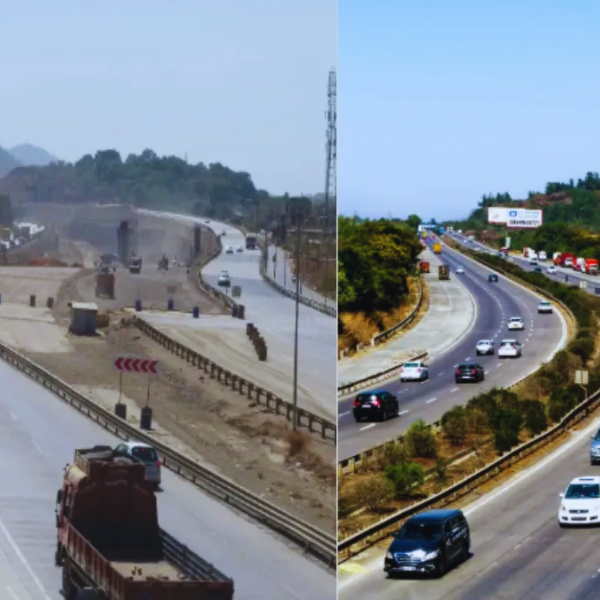
The Mumbai–Pune Expressway, officially known as the Yashwantrao Chavan Expressway, is one of India’s most significant high-speed corridors, linking two economic powerhouses. Over the past two decades, it has served as a crucial route for daily commuters, industrial freight, intercity travellers, and tourists heading to hill towns like Lonavala and Khandala. With the expressway now handling far more traffic than it was designed for, the Maharashtra State Road Development Corporation (MSRDC) has proposed a major expansion of the current six-lane structure to a ten-lane high-capacity expressway. This strategic upgrade aims to improve travel efficiency, support rising traffic, and accommodate long-term economic and infrastructural growth in the region.
Why the Expansion Has Become Necessary
Traffic on the expressway has increased substantially, with daily vehicle movement reaching between eighty thousand and one lakh vehicles. This is far beyond the original capacity of the expressway, resulting in persistent congestion, especially during weekends, peak hours, festive seasons, and holiday periods. Industrial and IT hubs in Chakan, Talegaon, Pimpri–Chinchwad, Hinjawadi, and Pune MIDC have expanded rapidly, placing immense pressure on the corridor. The expressway also connects many residential zones, tourist locations, and commercial pockets between the two cities.
Additionally, the upcoming Missing Link Project, which will create a faster and shorter bypass between Khopoli and Kusgaon, is expected to boost traffic from 2026 onwards. The particularly congested Adoshi Tunnel to Khandala stretch already operates like a ten-lane corridor due to the merger of traffic from the old Mumbai–Pune highway. Considering these factors, the lane expansion is not merely a developmental upgrade but a necessary response to rising mobility demands.
Project Specifications and Investment Structure
The proposed widening will cover an approximate stretch of ninety-five kilometres, increasing the expressway from six to ten lanes. The expansion project is estimated to cost around ₹14,260 crore. The funding structure is expected to include a forty percent financial contribution from the Maharashtra state government, while the remaining sixty percent will be financed by the infrastructure developer responsible for execution. Tendering and contractor appointments will follow after final approvals, and the project is expected to be completed by 2030. Toll collection rights may be extended beyond the current deadline of 2045 to allow cost recovery for such a large-scale investment.
Expected Benefits for Travel and Mobility
The expansion will significantly reduce travel time between Mumbai and Pune, which often stretches to three or four hours during heavy traffic. With ten lanes distributing traffic more evenly, the expressway will allow smoother, faster, and uninterrupted travel across the entire stretch. This improvement will particularly benefit daily office commuters, tourist traffic heading to the hills, corporate travellers, buses, and freight movement. The reduced congestion will also enhance safety, as the current narrow stretches and sudden lane merges are major contributors to vehicle collisions. A wider expressway will minimize braking conflicts, improve visibility, and reduce accident-prone zones.
Impact on Commercial, Industrial, and Logistics Movement
Industries in Chakan, Talegaon, Pimpri–Chinchwad, and Pune rely heavily on the Mumbai–Pune Expressway for transporting goods to Mumbai, Navi Mumbai, JNPT Port, and various industrial nodes. With smoother traffic flow, the expansion will reduce transit delays, improve efficiency, and lower transportation costs. The expressway is a lifeline for the automotive, manufacturing, logistics, and warehousing sectors that operate along the corridor. Faster cargo movement will improve supply chain reliability, attract new industries, and strengthen Maharashtra’s position as a leading manufacturing and logistics destination.
Influence on Real Estate and Urban Growth
Real estate markets along the expressway are expected to grow as connectivity improves. Areas such as Panvel, Khalapur, Karjat, Lonavala, Talegaon, Wakad, Baner, and emerging suburbs between Pune and Mumbai will become more appealing to homebuyers and investors. Infrastructure upgrades like expressway expansions typically lead to increased demand for residential projects, integrated townships, commercial complexes, hotels, and rental properties. Historically, infrastructure-led development has driven property appreciation in the range of fifteen to twenty-five percent over time. The improved travel experience will further strengthen the attractiveness of second homes, holiday villas, and weekend stays in scenic locations like Lonavala and Karjat.
Challenges Involved in the Expansion Project
The expressway passes through ecologically sensitive and geologically complex terrain, particularly around the Lonavala–Khandala ghat section. Widening the expressway here will require detailed geological surveys, slope stabilization measures, controlled rock excavation, and strict adherence to environmental regulations. Construction activities may cause temporary inconvenience to commuters due to lane closures or diversions. Additionally, land acquisition in certain stretches may pose challenges and could delay work if disputes arise. Toll fees may be increased or collected for a longer period to compensate for the investment, which could impact regular commuters but remains a necessary measure for financial sustainability.
Timeline and Future Outlook
As per the reports, The expansion is expected to progress through systematic phases, with project approvals, design finalization, and tender processes taking place between 2024 and 2025. Construction is likely to begin by 2027, while the Missing Link Project, scheduled for completion in 2026, will already enhance movement but also contribute to increased traffic load. Full completion of the ten-lane expressway is targeted for 2030. This development is part of Maharashtra’s broader infrastructure vision that includes upcoming projects such as the Navi Mumbai International Airport, Samruddhi Mahamarg, coastal road developments, metro expansions, and ring road projects around Pune.
Conclusion
The expansion of the Mumbai–Pune Expressway to ten lanes marks a critical advancement in Maharashtra’s infrastructure landscape. It promises faster travel, reduced congestion, enhanced safety, and smoother movement for both commuters and commercial traffic. The project will accelerate regional development, boost real estate demand, and support economic growth across the Mumbai–Pune corridor. Although challenges such as land acquisition, construction disruptions, and toll adjustments may arise, the long-term benefits significantly outweigh the temporary inconveniences. This expansion reflects a forward-thinking approach aimed at creating a modern, efficient, and future-ready expressway that can support Maharashtra’s growing mobility and economic needs for decades to come.
Trending News In Real Estate