The long-awaited Dwarka Expressway, one of India’s most talked-about infrastructure projects, has finally entered its operational phase — with toll collection officially beginning at the Bijwasan toll plaza. The National Highways Authority of India (NHAI) has introduced a structured tolling system while offering a short-term relief period for local commuters.
This marks a turning point not just for daily travelers between Delhi and Gurugram, but also for homeowners, investors, and developers with projects along the Dwarka Expressway corridor. Let’s break down everything you need to know — from toll rates and commuter relief to the larger real-estate implications for this fast-developing region.
Tolling Commences on Dwarka Expressway
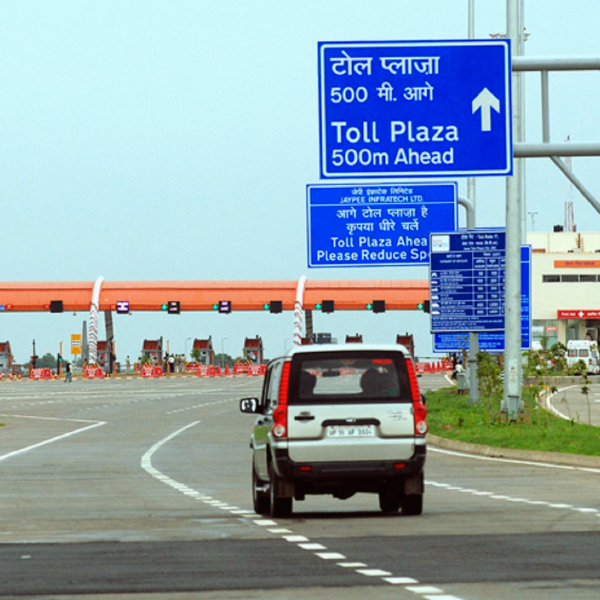
The NHAI has started toll collection at the Bijwasan toll plaza, a critical junction on the Dwarka Expressway, also known as the Northern Peripheral Road (NPR).
To ensure a smooth transition, the authority has provided a three-day toll-free window for local commuters, during which three lanes on each side of the plaza are open without charge. This temporary measure is intended to help residents adapt to the new system and manage traffic flow in the initial days.
This tolling initiation officially signals that the expressway is fully operational for regular vehicular movement. It represents a new chapter in Delhi-Gurugram connectivity — a shift from years of construction delays and testing phases to an active, revenue-generating infrastructure corridor.
Official Toll Rates and Pass Options
Under the new tolling system, private car owners and light commercial vehicles will pay approximately ₹220 for a one-way journey and ₹330 for a same-day return trip at the Bijwasan plaza.
To reduce the burden on local residents, NHAI has introduced a special monthly pass priced at around ₹340 per month. This concessional pass is available to commuters living within 20 kilometers of the toll plaza. Eligible users need to provide residential proof and vehicle registration documents to qualify for this pass.
This thoughtful addition addresses a major concern — regular travelers who use the expressway daily for work or errands can now save significantly compared to paying the full toll rate each day.
Integrated Tolling System Between Bijwasan and Kherki Daula
A major highlight of the new regime is the integrated tolling system between the Bijwasan plaza and the Kherki Daula plaza.
If a commuter passes both plazas on the same day in the same direction, they will not be charged twice. This system ensures fairness and avoids double billing, which has often been a concern among highway users. It reflects NHAI’s move toward digital, transparent, and user-friendly toll collection under the FASTag framework.
Initial Glitches and Commuter Feedback
Like most new infrastructure rollouts, the start of tolling has not been without challenges. Early reports suggest technical glitches with FASTag scanners, confusion over local-pass availability, and short notice to the public.
Many daily commuters expressed concern over delays and lack of clarity during the first few days. However, NHAI officials have assured that these teething issues will be resolved quickly, with customer support counters and digital help desks set up at the toll plaza.
While there has been some commuter frustration, most agree that operational tolling is a positive sign that the expressway’s construction and administrative processes have reached completion — a significant milestone for Delhi’s infrastructure ecosystem.
The Bigger Picture: A Milestone in Delhi–Gurugram Connectivity
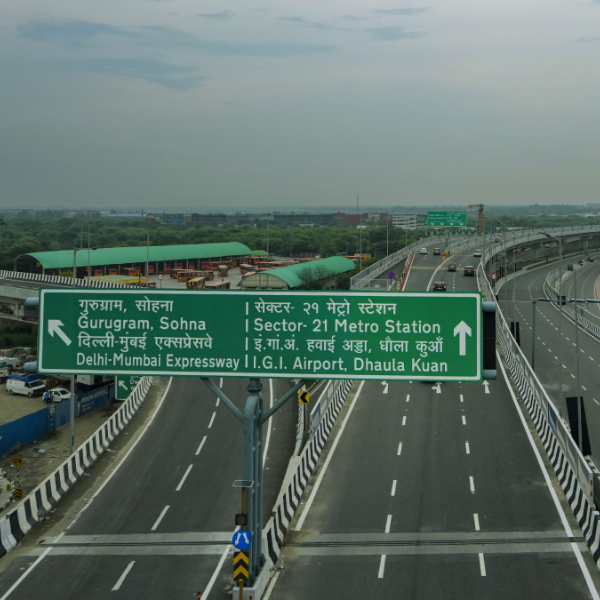
Stretching over 27 kilometers, the Dwarka Expressway connects Dwarka in Delhi to Kherki Daula in Gurugram, running parallel to NH-48.
Originally conceived to decongest the Delhi–Gurugram Expressway and provide an alternate high-speed corridor, the project has now evolved into one of the most advanced urban expressways in India, featuring:
Eight lanes with service roads
Intelligent traffic management systems
34-meter-wide green belts
Multi-level interchanges and underpasses
Its completion strengthens the Delhi–Manesar–Gurugram–Dwarka urban link and opens up fresh growth opportunities for residential, commercial, and mixed-use developments.
Impact on Real-Estate Around Dwarka Expressway
Infrastructure Maturity Increases Property Value
For years, the Dwarka Expressway was known for delays and incomplete connectivity. With tolling now active, it signifies that the road is fully functional and revenue-ready — a strong signal to buyers that the corridor has achieved infrastructure maturity.
Properties along this route — from Sector 99 to 115 in Gurugram and Sectors 21–28 in Dwarka — are expected to appreciate in value, as connectivity becomes consistent and reliable.
Buyer Confidence Restored
One of the main reasons buyers hesitated earlier was uncertainty over the expressway’s completion. Now, with toll collection and NHAI’s operational oversight, buyer confidence is returning. Developers can market their projects as “Dwarka Expressway operational”, adding authenticity to their sales campaigns.
Local Pass Boosts Residential Appeal
The ₹340 monthly local pass is a strategic advantage for residents. It means that daily commuters from nearby sectors can enjoy affordable mobility, enhancing the overall liveability of the area.
For property sellers, this detail can be highlighted in listings — “Eligible for NHAI local commuter pass at ₹340/month” — making the property more attractive to potential buyers concerned about recurring costs.
Commercial & Rental Opportunities
Improved accessibility is also a boon for rental property investors. Better connectivity means higher tenant demand, especially from professionals working in Gurugram or South Delhi who prefer to live near the expressway for easier commuting.
However, property owners should note that cab and delivery costs may slightly increase due to toll charges being passed on by service providers. This may have a short-term impact on rental yields but will likely stabilise as commuter incentives and passes normalize costs.
The Cost of Convenience: A Balanced Perspective
While tolling adds a new expense for regular commuters, it also brings undeniable benefits in terms of road quality, safety, and travel time.
For instance, a journey between Dwarka Sector 21 and Gurugram’s Kherki Daula that used to take 60–75 minutes during peak traffic can now be completed in 25–30 minutes. The time saved can easily outweigh the toll cost for most daily travelers.
Moreover, toll collection ensures that the expressway will receive regular maintenance and operational support, preventing the road from falling into disrepair — a common issue with non-tolled urban stretches.
In short, tolling transforms the Dwarka Expressway into a managed, sustainable infrastructure asset, ensuring long-term value for both users and investors.
Real-Estate Marketing Insights for Property Owners and Developers
For platforms like TyTil.com, which focus on verified property listings and owner-driven sales, this development offers a fresh marketing opportunity.
Here’s how property sellers and developers can leverage the news in their listings and campaigns:
Use Infrastructure-Based SEO Keywords
Include keywords such as:
Dwarka Expressway property for sale
Residential plots near Dwarka Expressway
Properties near Bijwasan toll plaza
Gurugram Dwarka Expressway ready-to-move projects
Real estate appreciation Dwarka Expressway 2025
These are high-ranking but low-competition terms that can help your listings appear in local property searches.
Update Listing Descriptions
Add infrastructure updates directly in property details:
“Located just 5 minutes from the newly operational Dwarka Expressway toll plaza, ensuring smooth connectivity to Delhi and Gurugram. Residents benefit from the new NHAI local pass scheme for daily commuting.”
Create Content Around the Expressway
Develop supporting blog posts and videos such as:
“Top 5 Residential Sectors to Watch on Dwarka Expressway”
“How the New Tolling System Impacts Gurugram Property Prices”
“Benefits of Buying a Home Near Operational Corridors in Delhi-NCR”
Such content boosts SEO visibility for your platform while positioning your brand as an informed real-estate authority.
Engage Local Sellers
Encourage local property owners to list now while demand rises. Use the tolling milestone as a credibility driver: buyers see it as proof of completion and future appreciation potential.
Short-Term Market Sentiment and Long-Term Outlook
In the short term, there may be mixed reactions. Commuters will take time to adjust to the new tolls, and developers might see increased queries about costs and access.
However, from a long-term perspective, Dwarka Expressway is now entering its growth phase. Infrastructure completion typically triggers a surge in property transactions, especially in Delhi-NCR markets.
According to property analysts, average prices along the expressway corridor could appreciate by 10–15 percent over the next 12 months, driven by:
Full connectivity to NH-48, IGI Airport, and upcoming Diplomatic Enclave 2
Commercial hubs developing in Sectors 99–113 (Gurugram)
Large-scale housing projects nearing possession
For sellers, this is the right time to list properties at realistic prices to attract early buyers before rates climb further.
Tolling Marks Maturity, Not Burden
The start of tolling on Dwarka Expressway is more than a commuter update — it’s a symbol of infrastructure maturity and a signal of growth readiness for the entire corridor.
Property owners and developers now have a tangible proof point to market their listings: a fully functional expressway with government-backed management, modern tolling, and sustained maintenance funding.
For end-users, the local monthly pass makes everyday travel affordable, while investors can look forward to consistent property appreciation as the area evolves into one of NCR’s most connected zones.
The coming months will define how smoothly NHAI streamlines toll operations and how commuters adapt to the changes. But one thing is certain — the Dwarka Expressway has transitioned from a long-promised infrastructure dream to a living, operational, and economically significant corridor for Delhi-NCR.
Trending News In Real Estate